
Murray Tax Records by Office
No single Murray County record answers every question about a property. The Assessor sets and defends value. The Tax Commissioner runs the account and applies the rates. The Tax Commissioner also collects what is due. Liens and tax deeds, once recorded, go back to the Clerk of Superior Court.
| Field | What It Shows | Where |
|---|---|---|
| Fair market value | The assessor's estimate of full value | Board of Tax Assessors |
| Assessed value | Georgia's taxable assessment base before adjustments | Board of Tax Assessors |
| Exemptions | Approved deductions or reductions | Assessor record and notice |
| Bill and status | Amount billed, payment, or delinquency | Tax Commissioner |
| Tax execution or sale | Collection action on unpaid property tax | Tax Commissioner and Clerk |
Georgia assesses most taxable property at 40 percent of fair market value. Exemptions and local rates then shape the final bill. Neither number equals an arm's-length sale price. Nominal deed consideration is not market evidence. Read each component in its proper year. Land, building, and miscellaneous values may roll into a total, while an exemption shifts the taxable math. A sales row can carry a reason code, and Murray's official sample showed a zero-dollar QC transfer that should never serve as a comparable.
Murray Assessment Card Search
The Murray QPublic entry takes an owner name, a property address, or a parcel ID. Its notice says values reflect the last approved digest year. Other data may change. Search by address when the parcel number is unknown. Then copy the ID exactly into the bill system.
A card can list owner and mailing addresses, acreage, land and improvement values, and legal description. It may also show sales history, exemptions, class, sketch, and map. Check the digest year before comparing any figure. This QPublic service is the official starting point for assessment research.
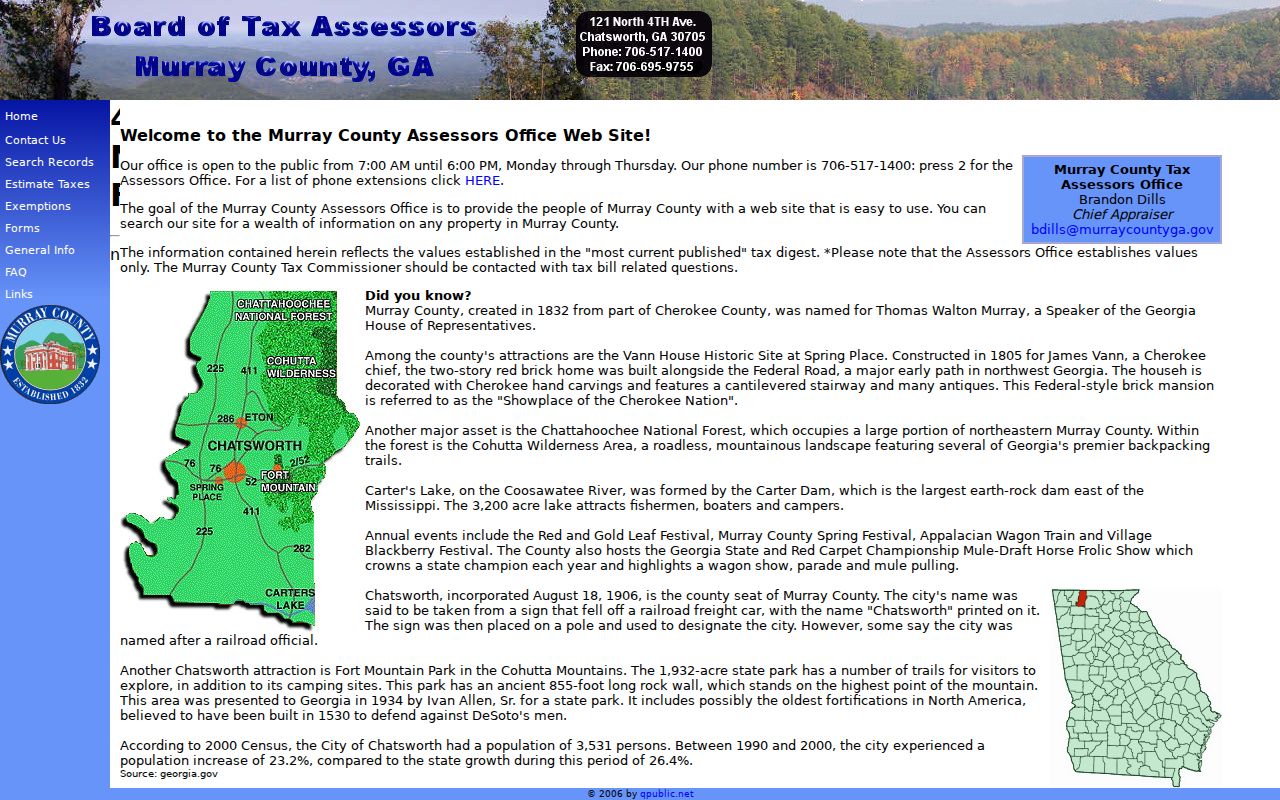
The acceptance notice should be read before opening or printing a card.
Murray's Forty Percent Assessment
Fair market value is the assessor's full-value estimate. Assessed value is what Georgia's 40 percent level produces before exemptions and other adjustments. A mill means one dollar of tax per thousand dollars of taxable value. The levy is the charge the rates impose.
- Fair market value
- The assessor's estimate of full value.
- Assessed value
- The statutory percentage applied for taxation.
- Homestead exemption
- Approved relief tied to qualifying ownership and occupancy.
- Tax lien
- A recorded claim arising from unpaid tax.
An assessment is not a private appraisal. It does not predict a sale price. Compare recorded characteristics first, because acreage, class, improvements, exemptions, tax district, and the effective valuation year can explain why two nearby accounts carry different figures.
Murray's 2026 Notice Changed
The 2026 Annual Notice of Assessment changed. Estimated tax-bill material is gone. A new Tax Savings section lists exemptions, deductions, reductions, and savings, and fair market value, property details, exemption status, and appeal rights all remain.
Use the notice to review value and appeal rights. The Tax Commissioner handles the actual bill. Tax Savings does not mean fair market value fell.
The change prevents a false comparison between an estimate and the later levy. Keep the notice as the appeal document, then retrieve the actual account once bills are issued. If figures differ, find the cause first: value, exemption, rate, district, payment, or timing, then contact the appropriate office.
Look Up a Murray Tax Bill
The Murray County Tax Commissioner site links Search & Pay Taxes, forms, homestead information, and tax-sale material. Search & Pay Taxes is the entry point for an account lookup. Use the QPublic parcel number when you have it. Confirm any charge before paying.
- Identify the parcel through QPublic and note the tax year.
- Open Search & Pay Taxes from the official office site.
- Match parcel, taxpayer, bill year, amount, and status.
- Compare exemptions and check delinquency or sale notices separately.
The payment portal captured below is the bill-access endpoint.
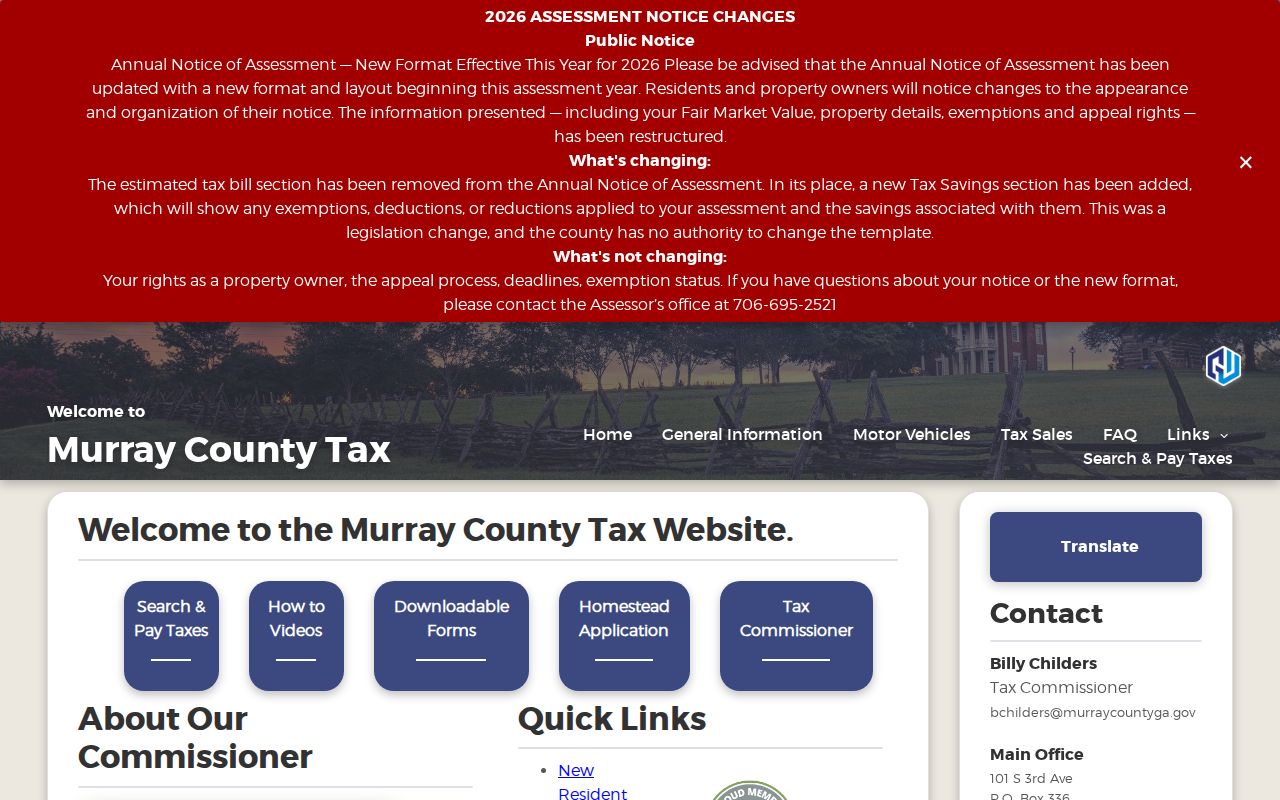
Start at the official office site, which carries current contacts and service notices. When the online system blocks access, call 706-695-3423 or email murraytax@murraycountyga.gov with the parcel number and tax year. The office confirms whether a displayed balance is current. Do not infer paid or delinquent status from an inaccessible screen.
January 1 Sets Murray Ownership
Murray County ties notices and bills to the owner of record on January 1. That is the county's rule. A sale closing later may leave the new name off the roll. It may stay off until the next year. The tax record is a dated snapshot, not a live title feed.
For a recent closing, check the newest recorded deed. Ask the Tax Commissioner how the bill should be handled. Keep deed, recording, roll, and bill years distinct.
A changed mailing address does not update title. It does not shift every bill either. Save the closing papers. Record the deed citation. Notify the tax office through its stated process, and confirm which party receives the current-year bill. The next certified digest may be the first assessment record bearing the new name.
Note: A January 1 roll name may still govern billing. A later deed naming a new grantee does not change that.
Murray Exemptions and Tax Savings
Georgia gives owners ways to trim a property tax bill. Options run from homestead, elderly, and disability provisions to disabled-veteran relief, conservation use, and forest-land programs. Eligibility can hinge on ownership, occupancy, use, income, acreage, or timely filing. A parcel card may show a flag. The local office decides the application.
Homestead rules rest on O.C.G.A. §48-5-40 and related sections. Local provisions can layer on extra relief. When a deduction seems absent from the 2026 Tax Savings section, contact the Assessor about the exemption status.
An exemption trims the taxable calculation, not necessarily the assessor's full fair market value. Keep the file complete. The application, approval year, parcel number, and notice belong together. Conservation and forest programs also carry continuing-use conditions. Confirm current rules before changing the land use or transferring the tract.
Delinquent Murray Property Tax
Unpaid real-estate taxes in Murray County accrue interest at one percent per month. That rate comes from the county's published question-and-answer material. A ten percent penalty follows after 90 days. Homesteaded property owing under $500 escapes that penalty. Confirm every live balance and date with the Tax Commissioner.
Continued nonpayment opens the door to levy and tax sale. Start with the official tax-sales page. Then cross-check any execution, lien, deed, release, or court filing with the Clerk. Treat unsolicited payment demands with care and verify them independently.
A tax-sale notice is not a completed transfer. Track the advertised parcel, execution, sale result, deed, and any later court or redemption-related filing as separate events. Ask the Tax Commissioner for current collection status and the Clerk for recorded instruments.
Murray Tax Help Off the Web
The Assessor sits at 121 N. Fourth Avenue in Chatsworth, open Monday through Thursday from 7:00 a.m. to 6:00 p.m. at 706-517-1400 extension 2. The Tax Commissioner works from 101 S. Third Avenue the same four days, 7:30 a.m. to 6:00 p.m., at 706-695-3423. Two offices answer in person.
Phone calls don't always settle it. A focused Georgia Open Records Act request can seek an existing assessment, bill, or sale record. The agency generally must produce it within three business days or state the date, estimated cost, and exemption. It need not build a custom report.
Ask for a document, not a calculation. A notice, parcel card, bill, payment record, execution, or sale notice beats a vague request for all tax information. Name the record precisely, and request electronic delivery when practical. Get a cost estimate before any broad search.
Appeal a Murray Assessment
Murray County gives owners 45 days from the assessment notice to appeal a property value. Start with the county appeal forms. State the parcel and tax year. Note the disputed value or class and the requested correction. Strong evidence matters. Accurate card facts, dated photos, the deed or plat, and sound comparable sales all help, and the county's forms page is the current appeal route.
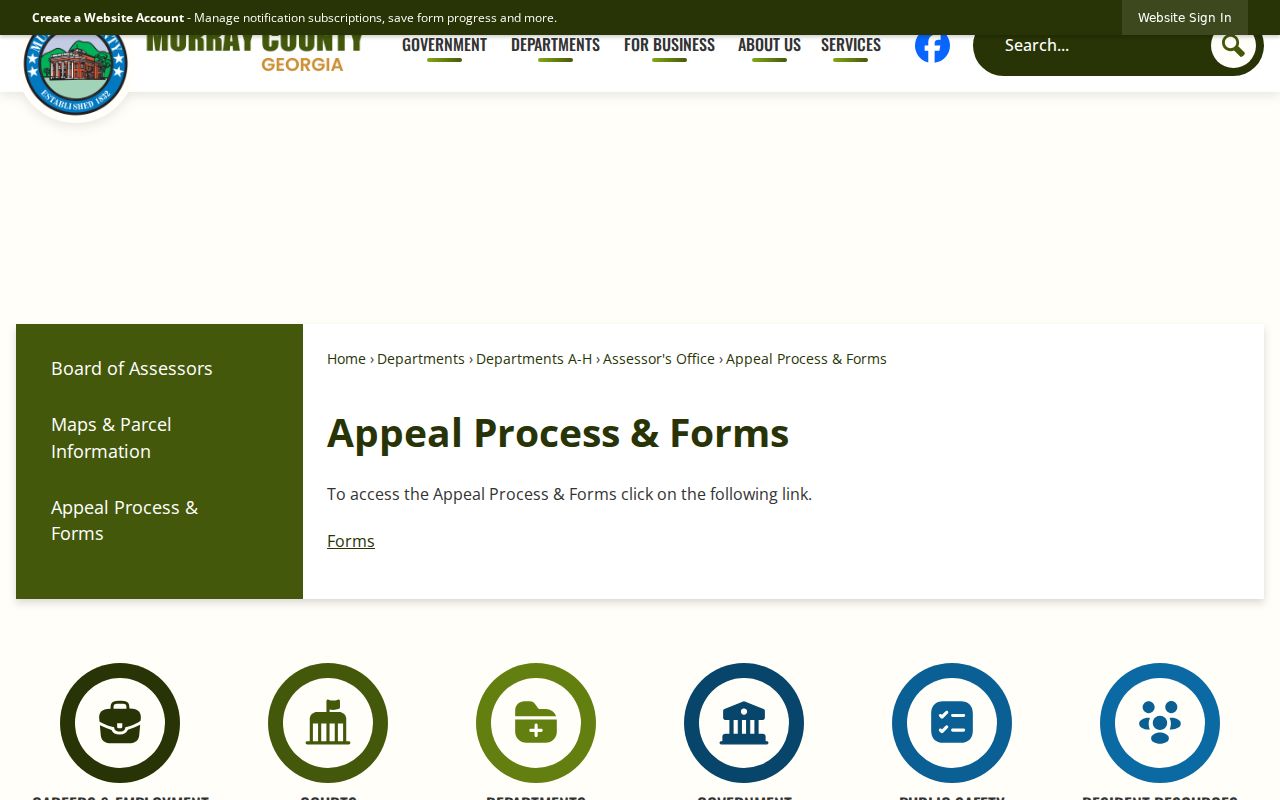
Count from the notice date. A later portal visit does not reset the deadline, and owners should keep proof of filing, the notice, and all evidence sent to the board.
Appeal window. File with the Murray County Board of Tax Assessors within 45 days of the notice date. Missing that period can forfeit the current year's appeal. Confirm receipt and retain a complete, dated copy of the full submission and all attachments.